
Pressure Washing & Exterior Cleaning
How Often Should You Pressure Wash Your Driveway?
Lone Wolf Staining · Published
Shade, traffic and surface condition are better guides than a one-size-fits-all cleaning schedule.
Use an annual check as a starting point
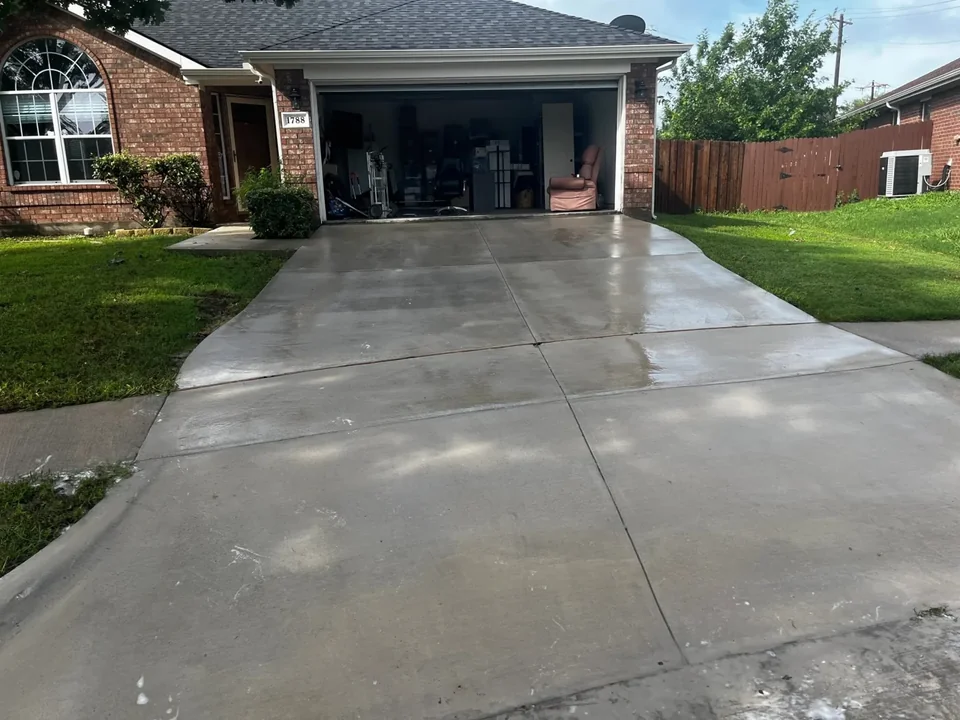
Inspect your driveway annually and clean when accumulated dirt, organic growth or staining warrants it. An annual cleaning may suit some properties; others need attention sooner or can wait longer. There is no benefit in repeatedly washing an already clean driveway just to follow a rigid schedule.
Check sooner if a shaded area becomes slippery or a spill occurs. A cleaning plan should respond to the surface and the problem, rather than treating every mark with more pressure.
What makes one driveway get dirty faster?
Trees, leaf litter, shade, vehicle traffic and nearby soil all influence buildup. In Dallas–Fort Worth, dusty dry periods can leave a film that becomes muddy after rain. Areas that stay damp may develop organic growth while a sunny section remains relatively clear.
Look around downspouts, low spots and sprinkler spray patterns. If water repeatedly crosses the same part of the driveway, cleaning alone will not correct the drainage or irrigation issue.
Identify the discoloration before choosing a treatment
Ordinary dirt, leaf stains, algae, oil and rust can look similar from a distance but may require different products and methods. Concrete also varies naturally in color. An older repair or a difference between pours may remain visible after cleaning.
Oil that has soaked into porous concrete may not disappear completely. Avoid promises of a perfectly uniform result, and test treatments in a small inconspicuous area before working across the entire driveway.
Concrete, pavers and coatings need different care
Sound, uncoated concrete can often tolerate controlled pressure washing, but surface age and condition still matter. New concrete, weakened surfaces, exposed aggregate, decorative finishes and sealers need particular care. Ask the installer or product manufacturer about cleaning restrictions when the surface is new or coated.
Pavers have joints that can lose sand under aggressive washing. Asphalt and coated driveways should not be treated as ordinary bare concrete. Identify the material and any sealer before choosing equipment or cleaning solutions.
More pressure is not always a better clean
Excessive pressure, a concentrated nozzle or holding the spray too close can etch the surface and leave permanent lines. Repeated passes cannot necessarily remove a stain that needs an appropriate cleaning product instead.
A suitable treatment, controlled application and consistent movement help achieve an even clean. Protect adjoining wood, painted surfaces, plants and garage openings. Follow product labels and manage wash water so cleaners and contaminants do not simply run into storm drains.
Small habits that reduce buildup
Routine upkeep can make the next cleaning easier without adding more pressure-washing sessions.
- Sweep leaves and loose soil before they collect in damp areas.
- Address vehicle leaks and absorb fresh spills promptly using an appropriate absorbent.
- Adjust sprinklers that continually wet the pavement.
- Keep drainage paths clear and investigate persistent ponding.
- Check shaded walking areas for slippery growth, especially after wet weather.
When professional cleaning is worthwhile
Consider professional assessment for widespread organic growth, persistent stains, large driveways or surfaces where the finish is uncertain. Tell the contractor about repairs, sealers and previous cleaning problems.
Ask how the surface will be assessed, which stains may remain and how surrounding areas and runoff will be managed. A useful result is a cleaner, serviceable driveway with the material protected—not the highest possible pressure setting.
Help for your property
Explore driveway cleaning in dfw and pressure washing and exterior cleaning from Lone Wolf Staining. We can help assess the condition and explain the preparation your project needs.
Request a Free EstimateCommon questions
How often should I clean my driveway?
Inspect your driveway annually and clean when accumulated dirt, organic growth or staining warrants it. An annual cleaning may suit some properties, while others need attention sooner or can wait longer.
Why do some driveways get dirty faster?
Trees, leaf litter, shade, vehicle traffic and nearby soil all influence buildup. Areas that stay damp may develop organic growth while a sunny section remains relatively clear.
Can too much pressure damage a driveway?
Excessive pressure, a concentrated nozzle or holding the spray too close can etch the surface and leave permanent lines. Repeated passes cannot necessarily remove a stain that needs an appropriate cleaning product instead.
Can every driveway surface be cleaned the same way?
Pavers, asphalt and coated driveways should not be treated as ordinary bare concrete. Identify the material and any sealer before choosing equipment or cleaning solutions.
Will cleaning remove every stain?
Oil that has soaked into porous concrete may not disappear completely. An older repair or a difference between concrete pours may also remain visible after cleaning.