
Fence Care & Restoration
How Often Should You Restain a Wood Fence in Texas?
Lone Wolf Staining · Published
Read the condition of your fence before putting a restaining date on the calendar.
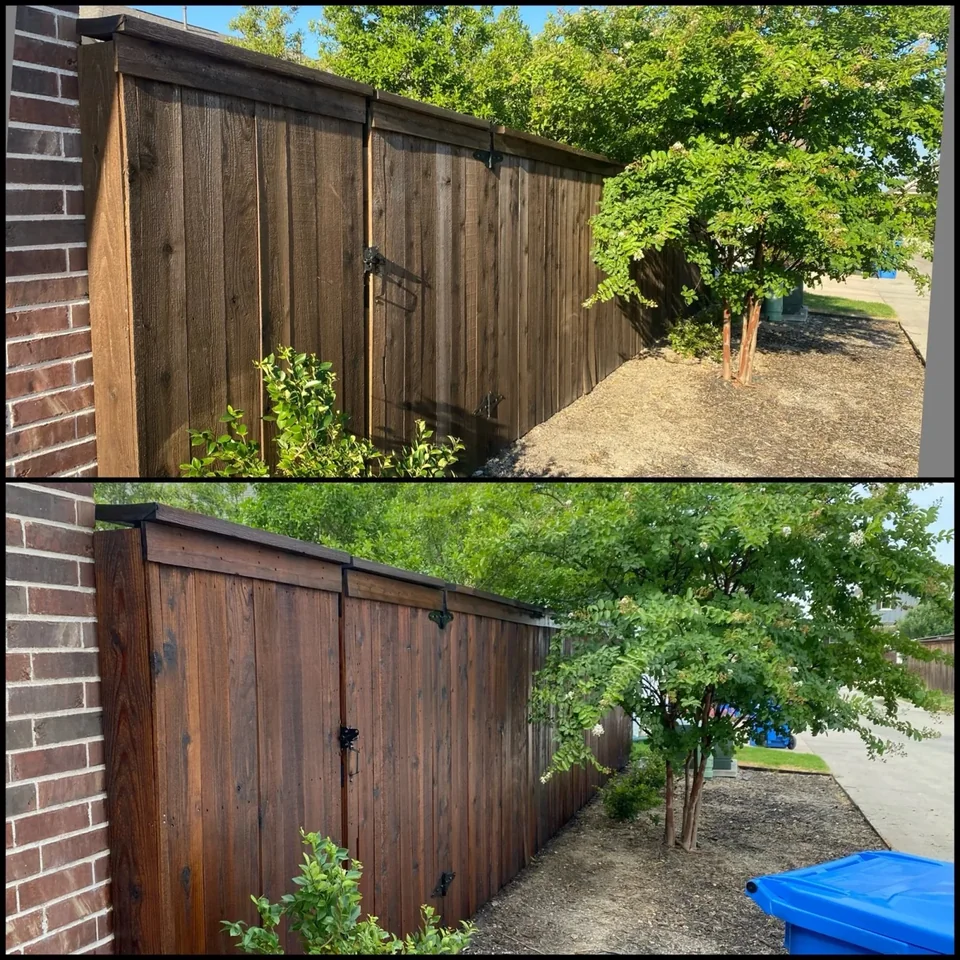
Inspect yearly; restain when the finish needs it
Check your fence at least once a year, and after weather that leaves visible damage. Restaining is usually a matter of years rather than months, but there is no single interval that fits every Texas fence. Start with the maintenance guidance for the product already on your wood, then adjust the plan to what you actually see.
An exposed fence may need attention before a sheltered section on the same property. Fading alone does not tell you whether the whole fence needs another coat. Look at the finish, the wood beneath it and the source of any discoloration before deciding between cleaning and restaining.
North Texas exposure changes the schedule
Strong sunlight can fade color and weather exposed wood. A west-facing fence with little shade may age differently from boards beneath a tree. Heat also affects application conditions: a surface can be too hot for the selected finish even when the forecast seems workable.
Rain, humid periods and sprinkler overspray can keep sections damp. Pay particular attention near the ground, around dense planting and where water collects. Seasonal swings make a spring and fall walk-around useful; they do not mean you must apply stain twice a year.
Look for patterns, not just a faded color
Compare several sections in similar light. Gray wood may indicate weathering where protection has worn away, but gray color does not automatically mean the boards are rotten. Dark or green areas can be surface buildup or a persistent moisture problem. Cleaning a small test area can help clarify what is underneath.
- Look for bare patches, uneven wear and exposed end grain.
- Check for peeling or flaking if the existing finish forms a film.
- Inspect loose fasteners, split boards, soft wood and leaning posts separately from finish wear.
- Photograph the same sections over time so changes are easier to spot.
Know what is already on the fence
Find the previous product name, color and application date if you can. Penetrating stains and film-forming coatings do not necessarily accept the same maintenance treatment. Applying a new product over an incompatible finish can leave poor adhesion or an uneven appearance.
If the product is unknown, plan for an assessment and a small compatibility test. Do not assume a darker color will hide preparation problems. The USDA Forest Products Laboratory emphasizes that finish type and application both affect exterior wood protection.
Cleaning, maintenance staining or restoration?
Cleaning may be enough when the finish is still sound and the main issue is dirt or organic buildup. Use a method appropriate for the wood and coating; aggressive pressure can roughen the surface. Address ongoing sprinkler or drainage problems so the same area does not immediately deteriorate again.
Maintenance staining is appropriate when a compatible finish has worn but the underlying surface remains suitable for recoating after cleaning and preparation. Restoration can involve more extensive removal of failed coating or weathered surface material. Our Rowlett before-and-after project illustrates why an existing fence needs a condition assessment, rather than an automatic extra coat.
Allow the wood to dry to the selected stain manufacturer’s requirements. Follow its surface preparation, temperature and rain-free application guidance. A fixed number of dry days is not a substitute for checking readiness.
Repair first, then plan the finish
Loose or damaged boards and unstable posts need attention before staining. Soft, crumbling wood or a structural concern calls for repair assessment; stain will not restore strength. Replace boards where needed and consider how new wood will accept color differently from older sections.
For a practical maintenance plan, keep the product details and inspect the areas with the greatest exposure. The right time to restain is when the finish and wood condition justify the work—not simply because a calendar reminder has appeared.
Help for your property
Explore maintenance staining and restaining and fence cleaning and preparation from Lone Wolf Staining. We can help assess the condition and explain the preparation your project needs.
Request a Free EstimateFurther reading: USDA Forest Products Laboratory: Finishing Wood.
Common questions
How often should I inspect my wood fence?
Check your fence at least once a year and after weather that leaves visible damage. Start with the existing product’s maintenance guidance, then adjust the plan to the condition you see.
Does gray wood mean the fence needs replacing?
Gray wood may indicate weathering where protection has worn away, but gray color does not automatically mean the boards are rotten. Soft, crumbling wood or a structural concern calls for repair assessment.
When is cleaning enough instead of restaining?
Cleaning may be enough when the finish is still sound and the main issue is dirt or organic buildup. Use a method appropriate for the wood and coating, and address ongoing sprinkler or drainage problems.
Why does the previous stain type matter?
Penetrating stains and film-forming coatings do not necessarily accept the same maintenance treatment. Applying a new product over an incompatible finish can leave poor adhesion or an uneven appearance.
How is maintenance staining different from restoration?
Maintenance staining is appropriate when a compatible finish has worn but remains suitable for recoating after cleaning and preparation. Restoration can involve more extensive removal of failed coating or weathered surface material.