
Home & Property Maintenance
Soft Washing vs. Pressure Washing: Which Does Your Home Need?
Lone Wolf Staining · Published
Choose the cleaning method for the surface—not simply for how dirty it looks.
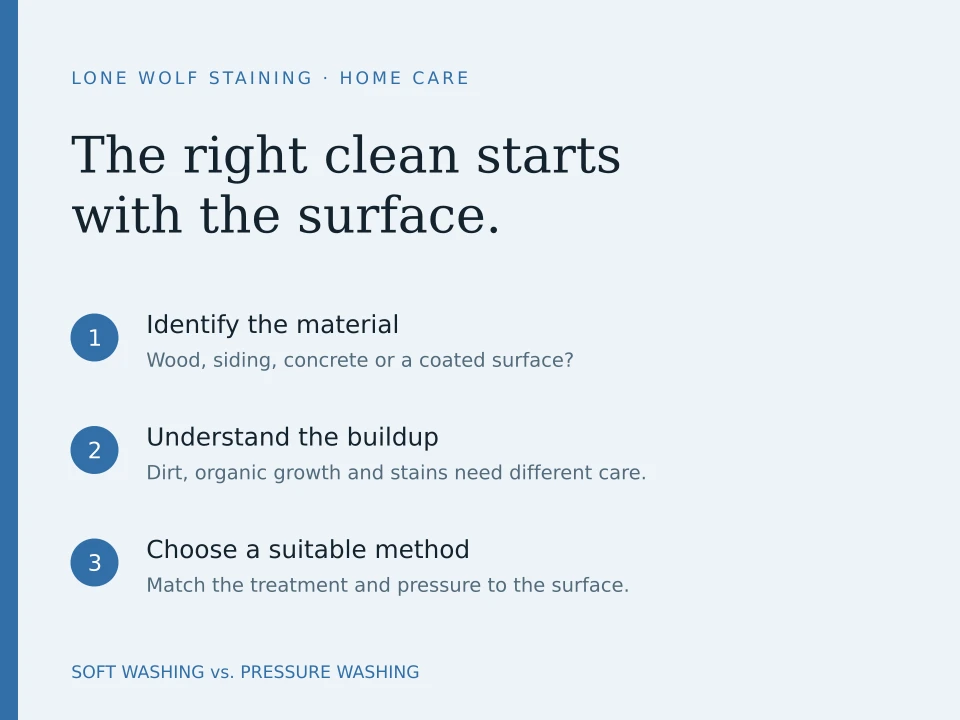
Start with the surface, then choose the method
Soft washing generally uses low-pressure application and rinsing with a cleaning solution chosen for the surface and buildup. Pressure washing relies more on the force of water to loosen and remove material, sometimes with a suitable cleaner as well. A property may need both methods on different surfaces.
The words alone do not tell you whether a treatment is appropriate. Siding, concrete, painted trim and wood each have different limits. Ask what will be used on each area and why.
What soft washing can do
Low-pressure cleaning is often appropriate where strong water pressure could damage a finish or push water behind an exterior surface. The cleaner, its concentration, contact time and rinsing method all matter. A soft-wash label does not make every chemical suitable for every material.
For example, James Hardie recommends a low-pressure hose and a soft nonmetal brush for routine siding cleaning. Follow the instructions for the specific siding and finish on your home instead of assuming one house-washing method applies everywhere.
Where pressure washing may be appropriate
Controlled pressure can be useful on sound, suitable concrete driveways, sidewalks and patios. Surface condition, coatings and joints must still be assessed. New, deteriorating or decorative concrete may need a gentler approach or manufacturer guidance.
High pressure can etch concrete, scar wood, remove paint or disturb paver joints. A narrow spray held close to the surface can cause damage quickly. Choosing the nozzle, distance and technique is as important as choosing the machine.
Solutions are part of the method, not an afterthought
Organic buildup, grease and mineral staining are different problems. They do not necessarily respond to the same treatment. Use products labeled for the intended surface and follow the manufacturer’s directions; never mix cleaning products casually.
Plants, people, pets and nearby materials need protection during application and rinsing. Discuss how runoff will be controlled. A method that cleans one surface while damaging landscaping or an adjacent finish is not a successful result.
A practical walk-around for homeowners
Before requesting cleaning, note what the surface is made of, whether it is coated and where the buildup is concentrated. You do not need to diagnose every stain; photographs and a clear description are useful starting points.
- Siding or painted trim: check the manufacturer’s care instructions and note loose paint or damaged joints.
- Concrete: identify sealers, repairs, cracks and any fragile areas.
- Wood: identify the existing stain if possible and look for weathering or soft areas.
- Persistent green or dark buildup: note shade, sprinkler spray and slow-drying areas.
- Windows, vents and electrical fittings: point out vulnerable openings before work begins.
Cleaning should not hide a repair problem
Loose siding, failing sealant, flaking paint or damaged wood should be assessed before washing. Do not aim water into openings or assume strong pressure will remove every mark safely. Rust, oxidation and permanent discoloration may need a different treatment or may remain visible.
A North Texas home can have sun-exposed walls, damp shaded corners and heavily used pavement within a few steps of each other. A sensible plan treats those conditions individually instead of applying the same pressure and solution everywhere.
What to ask before the work starts
Ask which surfaces will be cleaned, how their condition will be checked, which products are proposed and what results are realistic. Confirm how plants and adjoining materials will be protected.
For a driveway and house exterior cleaned together, expect the contractor to explain the different methods. The goal is appropriate cleaning with the surface preserved—not choosing a service solely because it sounds stronger or gentler.
Help for your property
Explore house soft washing and pressure washing services from Lone Wolf Staining. We can help assess the condition and explain the preparation your project needs.
Request a Free EstimateSurface-specific guidance: James Hardie siding care.
Common questions
What is the difference between soft washing and pressure washing?
Soft washing generally uses low-pressure application and rinsing with a cleaning solution chosen for the surface and buildup. Pressure washing relies more on the force of water to loosen and remove material, sometimes with a suitable cleaner as well.
When is low-pressure cleaning appropriate?
Low-pressure cleaning is often appropriate where strong water pressure could damage a finish or push water behind an exterior surface. The cleaner, its concentration, contact time and rinsing method all matter.
Where can pressure washing be appropriate?
Controlled pressure can be useful on sound, suitable concrete driveways, sidewalks and patios. New, deteriorating or decorative concrete may need a gentler approach or manufacturer guidance.
Can one cleaning solution be used on every surface?
Organic buildup, grease and mineral staining do not necessarily respond to the same treatment. Use products labeled for the intended surface and follow the manufacturer’s directions.
What should I ask before exterior cleaning begins?
Ask which surfaces will be cleaned, how their condition will be checked, which products are proposed and what results are realistic. Confirm how plants and adjoining materials will be protected.